Ultimate OSPF Labs for CCIE Enterprise Exam
Master OSPF for the CCIE Enterprise Lab Exam. Our ultimate workbook with hands-on labs covers complex scenarios, troubleshooting, and advanced topics ...
in Cisco Enterprise
Created by
Deepak Sharma
Last Updated: Aug/2026
Language: English
24:00 Hours
Last Updated: Aug/2026
Language: English
Duration: 23:57 Hours
What you will learn?
Configure basic OSPF routing and network types over broadcast, DMVPN, point-to-point, and point-to-multipoint NBMA media.
Manipulate OSPF DR/BDR elections, path selection with auto-cost, bandwidth, per-neighbor costs, and summarization.
Implement virtual links for discontiguous areas, non-backbone transit paths, loopback networks, and demand circuits.
Deploy OSPF authentication: clear text, MD5 with multiple keys, null authentication, and flooding reduction.
Master OSPF area types: stub, totally stubby, NSSA, not-so-totally stubby areas with Type-7/5 translation and LSA filtering.
Configure OSPF summarization (internal/external), default routing, conditional defaults, and reliable conditional routing with redistribution filtering.
About this course
This advanced OSPF lab course targets CCNP to CCIE Enterprise-level learners seeking hands-on mastery of OSPF configurations, optimizations, and troubleshooting. Each module draws from real-world enterprise scenarios to develop practical skills for production networking environments.
Learners configure OSPF network types over DMVPN and NBMA, manipulate DR/BDR elections, implement virtual links, and deploy conditional default routing. The labs replicate job-critical tasks to build confidence in setup, debugging, and performance tuning.
Designed for certification preparation or career advancement, this course delivers the expertise needed to excel. It suits network engineers, analysts, and IT professionals requiring proven OSPF proficiency.
Lab Features
This lab course provides a hands-on environment simulating real-world OSPF deployments, with CCNP to CCIE Enterprise-level exercises accessible online.
Key features include:
● Hands-On Labs: Built around practical challenges like OSPF over DMVPN and point-to-multipoint NBMA configurations.
● Online Availability: Access labs anytime from any location, ideal for professionals and remote learners.
● Job-Ready Skills: Master path selection, summarization, and area designs to improve network convergence.
● Tools & Technologies: Use Cisco IOS for OSPF authentication, demand circuits, LSA filtering, and more.
● Advanced OSPF Concepts: Cover DR election control, non-backbone transit areas, NSSA translations, and conditional routing.
● Certification-Focused: Aligns with CCNP and CCIE Enterprise lab exam requirements.
● Repeatable Labs: Reset and retry labs to achieve full mastery.
● Scenario-Based Learning: Labs reflect common job tasks such as discontiguous areas and failover strategies.
Contact learner advisors for enrollment details and more information.
Target Audience
This course builds advanced OSPF skills through job-focused labs for networking professionals or those preparing for CCNP and CCIE Enterprise certifications.
Enroll if in these roles or with similar goals:
1. Network Engineers
2. Network Administrators
3. CCNP Candidates
4. IT Infrastructure Professionals
5. Technical Support Engineers
6. Routing & Switching Specialists
7. Network Consultants
8. IT Students with CCNA-level knowledge
How this Lab Helps Master OSPF
The course connects OSPF theory to practice, enabling confident handling of enterprise deployments. Guided labs cover initial configurations through advanced topics like virtual links, NSSA filtering, and reliable conditional defaults.
Each exercise simulates production issues, such as multipoint flooding or stub area exits, in a controlled setting. Learners apply concepts, including summarization for scalability and authentication key rollovers.
Completion prepares candidates for CCNP exams and equips them for roles in OSPF design, engineering, and operations.
Suggested by top companies
Top companies suggest this course to their employees and staff.


Similar Courses



FAQ
What is the prerequisite knowledge for this course?
CCNA-level networking basics, including IP routing fundamentals. Familiarity with OSPF theory helps, but labs start from basic configurations for CCNP/CCIE prep.
How long does each lab take to complete?
Most labs take 30-90 minutes, depending on complexity. Repeatable setups allow practice at your pace, with guided instructions for efficient completion.
Can I access labs on mobile devices?
Yes, labs are browser-based and optimized for desktops/laptops. Mobile access works for viewing instructions, but hands-on configuration needs a larger screen.
Are solutions or answer keys provided?
Yes, each lab includes step-by-step verification commands, expected outputs, and troubleshooting tips. Full configs available post-completion for reference.
Is this course aligned with current CCNP/CCIE exams?
Yes, labs cover core OSPF topics from latest ENCOR and lab exam blueprints, focusing on practical skills tested in certifications.
What if I get stuck during a lab?
If you are ever stuck on any labs, you can use your limited instructor support, to talk to our instructors and get your queries resolved.
How to access the lab?
Login to www.uninets.com and check your purchased lab course click on learning page and then click on GO TO LAB option.
How to extend lab duration and lab validity?
whenever you click on GO to LAB there will be a option the lab duration and lab validity extend option available via a popup.
How to get lab support?
Email support@uninets.com (Level 1), or escalate via phone/WhatsApp at +91 8527916751 (Level 2) or at +91 9818239009 (Level 3 for corporate only), with standard support available Mon-Sat 10am-7pm IST and 24x7 corporate support.
Comments (0)
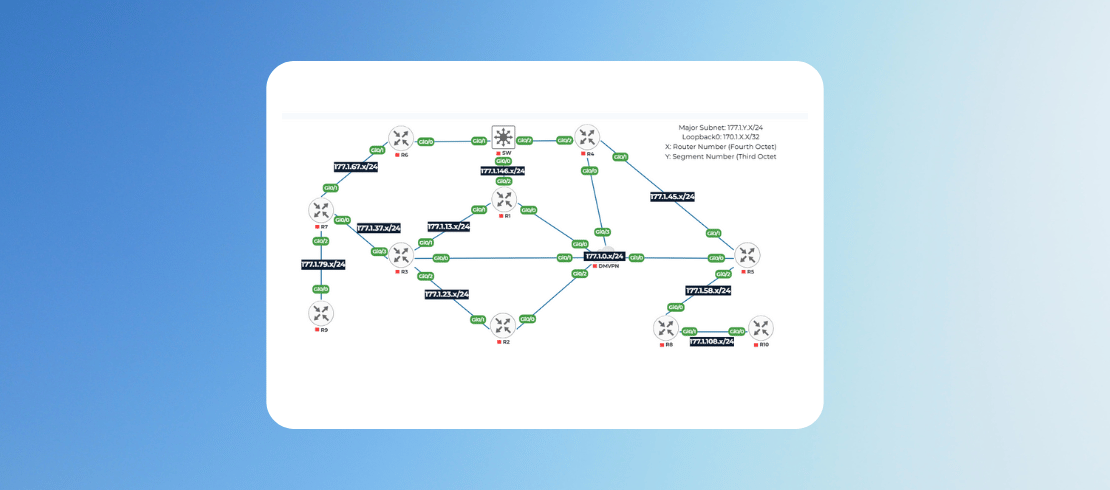
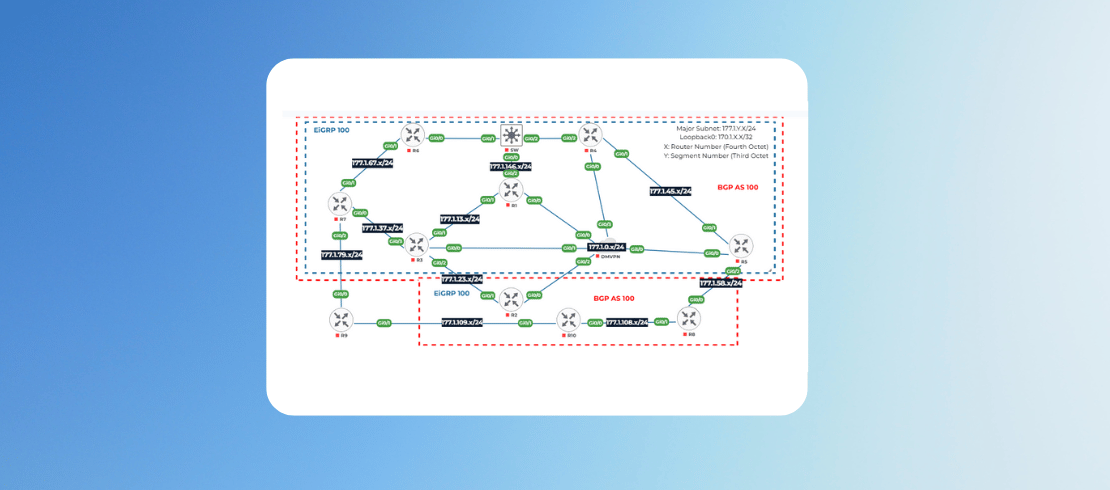
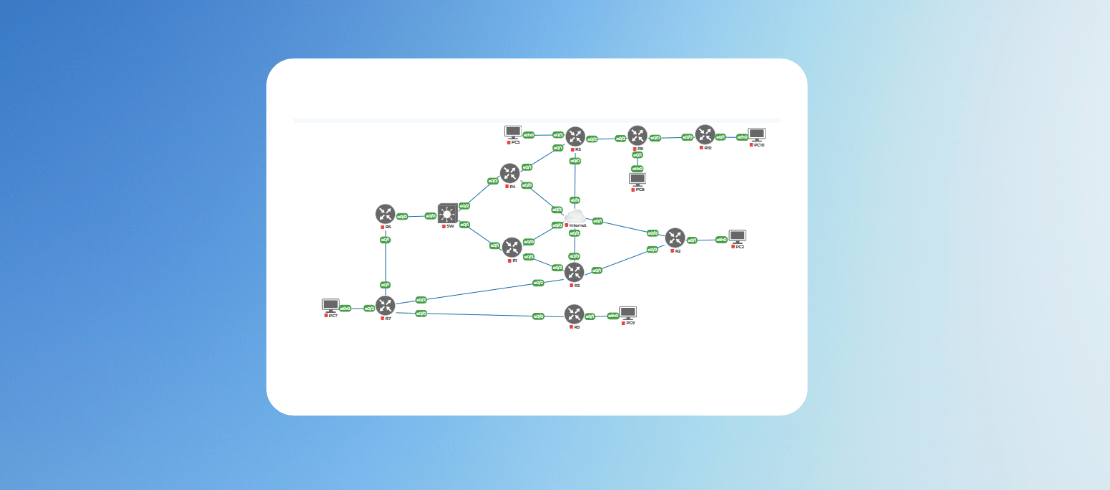
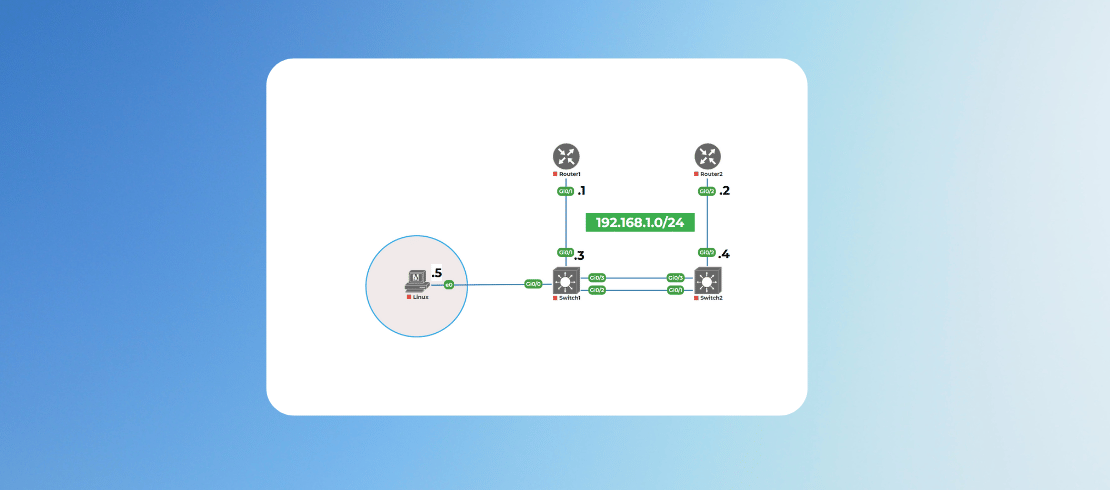
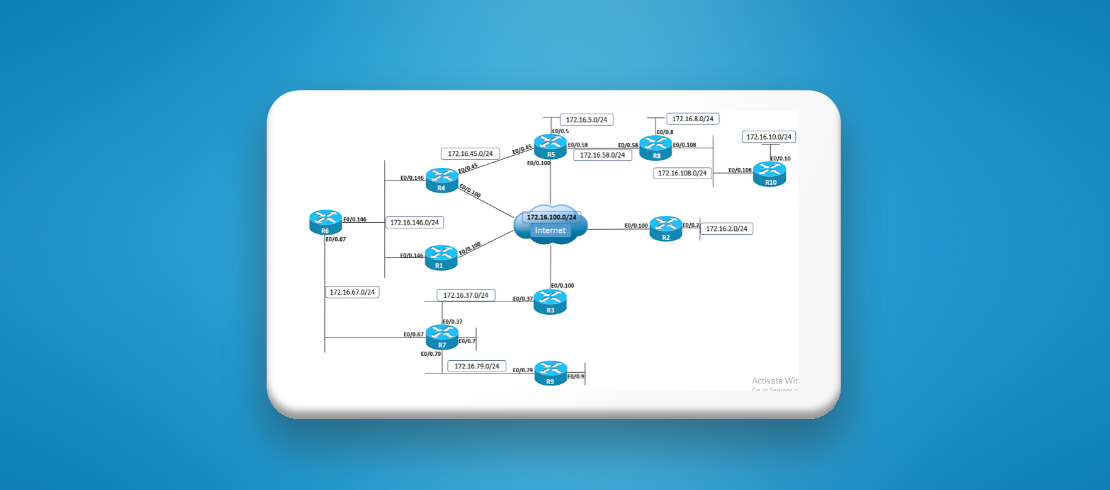
Lab Support Guidelines and Network Topology Details
2 Parts
- 0:10 Hr
Lab 1: OSPF Over Broadcast (Ethernet) Media and Lab Support
1 Parts
- 1:00 Hr
In this Lab, implementing OSPF on ethernet segments between R6 and R7, R7 and R9.
60 Min
Attachments:
Lab 2: OSPF Over DMVPN
1 Parts
- 0:30 Hr
In this Lab, OSPF Area 0 will be configured Over DMVPN network and ensuring the IP connectivity.
30 Min
Attachments:
Lab 3: OSPF DR-BDR Election Manipulation
1 Parts
- 1:00 Hr
In this Lab, configure OSPF Area 0 over DMVPN and over Broadcast network type to understand the working of DR and BDR election process.
60 Min
Attachments:
Lab 4: OSPF Network Point-to-Point
1 Parts
- 0:30 Hr
In this lab, we will configure OSPF in area 0 between R6, R7, and R9 to use a point-to-point OSPF network type.
30 Min
Attachments:
Lab 5: OSPF Network Point-to-Multipoint
1 Parts
- 0:30 Hr
In this lab, we will configure OSPF in area 12345 over the DMVPN cloud, between R1 - R5, and use an OSPF network type of point-to-multipoint.
30 Min
Attachments:
Lab 6: OSPF Network Point-to-Multipoint Non-Broadcast
1 Parts
- 0:30 Hr
In this lab, we will configure OSPF in area 12345 over the DMVPN cloud, between R1 and R5, and use an OSPF network type of point-to-multipoint non-broadcast.
30 Min
Attachments:
Lab 7: OSPF Network Loopback
1 Parts
- 0:30 Hr
In this lab, we will configure OSPF in area 0 between R7 and R9, and create Loopback161 on R7 and R9.
30 Min
Attachments:
Lab 8: OSPF Path Selection with Auto Cost
1 Parts
- 0:30 Hr
Implement Auto Cost Path Selection in OSPF
In this lab, we will modify the global OSPF cost calculation of all devices.
30 Min
Attachments:
Lab 9: OSPF Path Selection with Cost
1 Parts
- 0:30 Hr
Implement Path Selection with No Cost in OSPF
In this lab, we will use the interface-level ip ospf cost command.
30 Min
Attachments:
Lab 10: OSPF Path Selection with Bandwidth
1 Parts
- 0:30 Hr
OSPF Path Selection with Bandwidth
In this lab, we will use the interface-level bandwidth command.
30 Min
Attachments:
Lab 11: OSPF Path Selection with Per-Neighbor Cost
1 Parts
- 0:30 Hr
Implementing OSPF Path Selection with Per-Neighbor Cost
In this lab, we will configure per-neighbor cost values.
30 Min
Attachments:
Lab 12: Discontiguous OSPF Areas with Virtual Links
1 Parts
- 0:30 Hr
Implementing Discontiguous OSPF Areas with Virtual Links
In this lab, configure the network to maintain full reachability.
30 Min
Attachments:
Lab 13: OSPF Path Selection with Non Backbone Transit Areas
1 Parts
- 0:30 Hr
Implementing Path Selection with Non Backbone Transit Area
In this lab, we will configure a virtual link between R1 and R6.
30 Min
Attachments:
Lab 14: OSPF Path Selection with Virtual Links
1 Parts
- 0:30 Hr
Implementing Path Selection with Virtual Links
In this lab, we will configure the OSPF domain so that traffic transits via a direct link.
30 Min
Attachments:
Lab 15: OSPF Demand Circuit
1 Parts
- 0:30 Hr
Implementing Demand Circuit
In this lab, we will configure the OSPF demand circuit feature.
30 Min
Attachments:
Lab 16: OSPF Flooding Reduction
1 Parts
- 0:30 Hr
Implement Flooding Reduction
In this lab, we will stop periodic paranoid update LSA flooding.
30 Min
Attachments:
Lab 17: OSPF Clear Text Authentication
1 Parts
- 0:30 Hr
Implement Clear Text Authentication
In this lab, we will configure clear-text OSPF authentication for all adjacencies.
30 Min
Attachments:
Lab 18: OSPF MD5 Authentication
1 Parts
- 0:30 Hr
Implement MD5 Authentication
In this lab, we will configure MD5-based OSPF authentication for all adjacencies.
30 Min
Attachments:
Lab 19: OSPF Null Authentication
1 Parts
- 0:30 Hr
Implement OSPF Null Authentication
In this lab, we will enable clear-text OSPF authentication for the adjacency.
30 Min
Attachments:
Lab 20: OSPF MD5 Authentication with Multiple Keys
1 Parts
- 0:30 Hr
Implement MD5 Authentication with Multiple Keys
In this lab, we will enable OSPF MD5 authentication over the DMVPN cloud.
30 Min
Attachments:
Lab 21: OSPF Internal Summarization
1 Parts
- 0:30 Hr
Implement Internal Summarization in OSPF
In this lab, we will configure R5 to advertise a summary route.
30 Min
Attachments:
Lab 22: OSPF Path Selection with Summarization
1 Parts
- 0:30 Hr
Implement Path Selection with Summarization
In this lab, we will configure R4 to originate the summary route.
30 Min
Attachments:
Lab 23: OSPF External Summarization
1 Parts
- 0:30 Hr
Implement OSPF External Summarization
In this lab, we will learn how to share loopback IPs in OSPF using summaries and custom metrics.
30 Min
Attachments:
Lab 24: OSPF Stub Areas
1 Parts
- 0:30 Hr
Implement Stub Areas
In this lab, we will share loopback IPs in OSPF and filter external routes between areas effectively.
30 Min
Attachments:
Lab 25: OSPF Totally Stubby Areas
1 Parts
- 0:30 Hr
Implement Totally Stubby Areas
In this lab, we will configure loopbacks, redistribute into OSPF, and filter inter-area/external routes while maintaining connectivity.
30 Min
Attachments:
Lab 26: OSPF Not-So-Stubby Areas
1 Parts
- 0:30 Hr
Implement Not-So-Stubby Areas
In this lab, we will add loopbacks, redistribute into OSPF, and filter external routes while allowing area 3 redistribution.
30 Min
Attachments:
Lab 27: OSPF Not-So-Stubby Areas and Default Routing
1 Parts
- 0:30 Hr
Implement Not-So-Stubby Areas and Default Routing
In this lab, we will add loopbacks, redistribute into OSPF, filter external routes, and advertise a default route with cost.
30 Min
Attachments:
Lab 28: OSPF Not-So-Totally-Stubby Areas
1 Parts
- 0:30 Hr
Implement Not-So-Totally Stubby Areas
In this lab, we will add loopbacks, redistribute into OSPF, and configure area 3 to block inter-area/external routes.
30 Min
Attachments:
Lab 29: OSPF Stub Areas with Multiple Exit Points
1 Parts
- 0:30 Hr
Implement Stub Points with Multiple Exit Points
In this lab, we will configure NSSA, redistribute Loopback100, disable R6–R7 link, ensure R6 routes inter-area via R1 and external via R4.
30 Min
Attachments:
Lab 30: OSPF NSSA Type-7 to Type-5 Translator Election
1 Parts
- 0:30 Hr
Implement OSPF NSSA Type-7 to Type-5 Translator Election
In this lab, we will do OSPF NSSA configuration and route control to ensure optimized inter-area and external route advertisement.
30 Min
Attachments:
Lab 31: OSPF NSSA Redistribution Filtering
1 Parts
- 0:30 Hr
Implement NSSA Redistribution Filtering
In this lab, we will show NSSA configuration and route control for selective LSA propagation and external route redistribution in OSPF.
30 Min
Attachments:
Lab 32: OSPF LSA Type-3 Filtering
1 Parts
- 0:30 Hr
Implement LSA Type-3 Filtering
In this lab, we will use OSPF LSA Type-3 filtering to control inter-area route visibility without impacting future area configurations.
30 Min
Attachments:
Lab 33: OSPF Default Routing
1 Parts
- 0:30 Hr
OSPF Default Routing
In this lab, we will do OSPF external route origination with different types and metrics using static default routes.
30 Min
Attachments:
Lab 34: OSPF Conditional Default Routing
1 Parts
- 0:30 Hr
Implement Conditional Default Routing
In this lab, we will show conditional default route origination in OSPF based on Loopback presence in the routing table.
30 Min
Attachments:
Lab 35: OSPF Reliable Conditional Default Routing
1 Parts
- 0:30 Hr
Implement Reliable Conditional Default Routing
In this lab, we will use conditional default route advertisement in OSPF using IP SLA for reachability tracking.
30 Min
Attachments:
Lab 0: Initial OSPF Configurations
11 Parts
- 0:10 Hr
Load Initial Configurations and Verifications
In this Lab, you'll load initial ospf configurations on all routers and verify the layer 3 connectivity.
10 Min
Attachments:
R1
R1 Initial OSPF Configurations
1.55 KB
R2
R2 Initial OSPF Configurations
1.39 KB
R3
R3 Initial OSPF Configurations
1.69 KB
R4
R4 Initial OSPF Configurations
1.55 KB
R5
R5 Initial OSPF Configurations
1.60 KB
R6
R6 Initial OSPF Configurations
741 bytes
R7
R7 Initial OSPF Configurations
1009 bytes
R8
R8 Initial OSPF Configurations
864 bytes
R9
R9 Initial OSPF Configurations
711 bytes
R10
R10 Initial OSPF Configurations
698 bytes
Lab00: Basic OSPF Routing Configurations
11 Parts
- 0:10 Hr
Load Basic OSPF Routing Configurations
In this Lab, you'll load basic ospf configurations on all routers and verify the layer 3 connectivity.
10 Min
Attachments:
R1
Basic OSPF Routing Configurations required to be uploaded for next labs.
1.72 KB
R2
Basic OSPF Routing Configurations required to be uploaded for next labs.
1.52 KB
R3
Basic OSPF Routing Configurations required to be uploaded for next labs.
1.88 KB
R4
Basic OSPF Routing Configurations required to be uploaded for next labs.
1.71 KB
R5
Basic OSPF Routing Configurations required to be uploaded for next labs.
1.87 KB
R6
Basic OSPF Routing Configurations required to be uploaded for next labs.
854 bytes
R7
Basic OSPF Routing Configurations required to be uploaded for next labs.
1.05 KB
R8
Basic OSPF Routing Configurations required to be uploaded for next labs.
932 bytes
R9
Basic OSPF Routing Configurations required to be uploaded for next labs.
784 bytes
R10
Basic OSPF Routing Configurations required to be uploaded for next labs.
799 bytes

4.79
6 Reviews