USD ($)
$
United States Dollar
India Rupee

GRE Backup Interface

Lesson 11/13 | Study Time: 60 Min
GRE Backup Interface

Task  

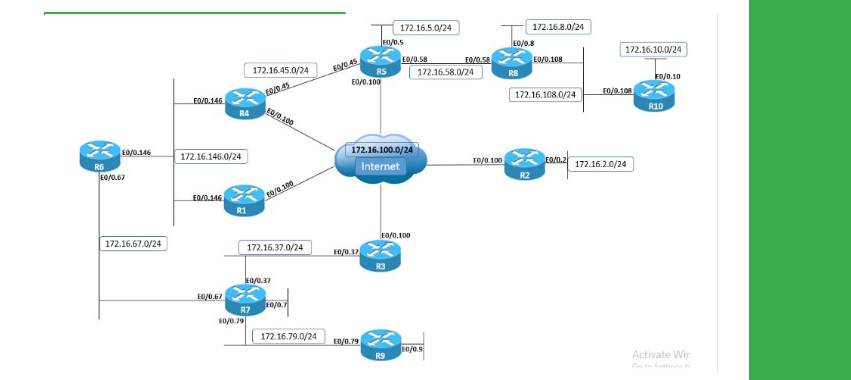
● Configure two GRE tunnels between R4 and R5 as follows: 

● Tunnel45 with IPv4 addresses 172.16.0.Y/24, where Y is the router number, sourced from VLAN 45 Ethernet link. 

● Tunnel100 with IPv4 addresses 172.16.0.Y/24, where Y is the router number, sourced from VLAN 100 Ethernet link. 

● Configure IPv4 static routes on R5 for R4’s Loopback0 interface via both Tunnel100 and Tunnel45. 

● Configure IPv4 static routes on R4 for R5’s Loopback0 interface via both Tunnel100 and Tunnel45. 

● The static routes on R4 and R5 via the Tunnel45 should have a higher administrative distance than those on Tunnel100. 

● Configure the backup interface feature on R4 and R5 so that if the Tunnel100 goes down, Tunnel45 is activated. 

● Ensure that the backup link is activated 3 seconds after the main link fails, and deactivated when the main link is active for 60 seconds. 

● To verify this configuration, ensure that traffic between Loopback0 prefixes of R4 and R5 is routed out Tunnel100: 

● If Tunnel100 interface state goes DOWN, traffic is rerouted out on Tunnel45. 

Explanation 

In this example, R4 and R5 use the backup interface feature along with duplicate routing information to perform both traffic engineering and redundancy.

With the backup interface configured on R4’s and R5's point-to-point GRE Tunnel100 interface, R4 and R5 wait for the line protocol of Tunnel100 interface to go DOWN before GRE interface Tunnel45 is activated. The following rules and restrictions apply when implementing the backup interface functionality: 

● The primary/active interface being backed up must be a point-to-point interface type, because its state can be better determined. 

● The secondary/standby interface acting as backup can be any interface except sub-interface, because the state of the main interface determines the state of sub-interfaces in general. 

Verify that backup interface is correctly configured, and Tunnel45 waits for Tunnel100 to go DOWN to become active. 

R4

show backup 

Primary Interface   Secondary Interface   Status 

-----------------   -------------------   ------ 

Tunnel100           Tunnel45              backup mode 


show ip interface brief | i Tunnel

Tunnel0                172.16.0.4       YES manual up                    up       

Tunnel45               172.16.0.5      YES manual standby mode          down 

Tunnel100              172.16.0.5     YES manual up                    up

R5

show backup

Primary Interface          Secondary Interface        Status 

-------------------------  -------------------------  ------ 

Tunnel100                  Tunnel45                   normal operation

show ip interface brief | i Tunnel

Tunnel0                172.16.0.5       YES manual up                    up       

Tunnel45               172.16.0.5      YES manual standby mode          down 

Tunnel100              172.16.0.5     YES manual up                    up 

Verify that traffic between Loopback0 prefixes of R4 and R5 is primarily routed over GRE Tunnel100. 

R4

show ip route 10.1.5.5

Routing entry for 10.1.5.5/32 

  Known via "static", distance 10, metric 0 (connected) 

  Routing Descriptor Blocks: 

  * directly connected, via Tunnel100 

      Route metric is 0, traffic share count is 1

R5

show ip route 10.1.4.4

Routing entry for 10.1.4.4/32 

  Known via "static", distance 10, metric 0 (connected) 

  Routing Descriptor Blocks: 

  * directly connected, via Tunnel100 

      Route metric is 0, traffic share count is 1


traceroute 10.1.4.4 source loopback0

Type escape sequence to abort. 

Tracing the route to 10.1.4.4 

VRF info: (vrf in name/id, vrf out name/id) 

  1 172.16.0.4 3 msec *  12 msec 

Disable VLAN 100 interface on both R4 and R5, which will trigger the backup Tunnel45 interface to go UP after the configured delay of 3 seconds.

R4

debug backup

Backup events debugging is on

configure terminal

Enter configuration commands, one per line.  End with CNTL/Z. 

interface  GigabitEthernet0/0.100
shutdown

R4(config)#interface  GigabitEthernet0/0.100 

R4(config-subif) #shutdown 


R5

configure terminal

Enter configuration commands, one per line.  End with CNTL/Z. 

interface  GigabitEthernet 0/0.100
shutdown

R5(config)#interface GigabitEthernet 0/0.100 

R5(config-subif) #shutdown 

R4# 

BACKUP(Tunnel100): event = primary interface went down 

BACKUP(Tunnel100): changed state to "waiting to backup" 

BACKUP(Tunnel100): event = timer expired on primary 

BACKUP(Tunnel100): secondary interface (Tunnel45) made active 

BACKUP(Tunnel100): changed state to "backup mode" 

%LINEPROTO-5-UPDOWN: Line protocol on Interface Tunnel45, changed state to up 

BACKUP(Tunnel45): event = secondary interface came up 

%LINK-3-UPDOWN: Interface Tunnel45, changed state to up 

Verify that the backup interface is now active. 

show backup

Primary Interface          Secondary Interface        Status 

-------------------------  -------------------------  ------ 

Tunnel100                  Tunnel45                   backup mode


sho ip interface brief | i Tunnel

Tunnel0                172.16.0.4       YES manual up                    down     

Tunnel45               172.16.0.4      YES manual up                    up 

Tunnel100              172.16.0.4     YES manual up                    down 

 Verify that traffic between Loopback0 is now routed over GRE Tunnel45. 

R4

show ip route 10.1.5.5

Routing entry for 10.1.5.5/32 

  Known via "static", distance 20, metric 0 (connected) 

  Routing Descriptor Blocks: 

  * directly connected, via Tunnel45 

      Route metric is 0, traffic share count is 1 

R5

show ip route 10.1.4.4

Routing entry for 10.1.4.4/32 

  Known via "static", distance 20, metric 0 (connected) 

  Routing Descriptor Blocks: 

  * directly connected, via Tunnel45 

      Route metric is 0, traffic share count is 1


traceroute 10.1.4.4 source loopback0 

Type escape sequence to abort. 

Tracing the route to 10.1.4.4 

VRF info: (vrf in name/id, vrf out name/id) 

  1 172.16.0.4 5 msec * 3 msec 

When R4's and R5's VLAN 100 interfaces are re-enabled, Tunnel100 interface is reactivated after the configured delay of 60 seconds. 

R4

configure terminal

Enter configuration commands, one per line.  End with CNTL/Z. 

interface  GigabitEthernet0/0.100
no shutdown

R4(config)#interface  GigabitEthernet0/0.100 

R4(config-subif) #no shutdown 

R5

configure terminal

Enter configuration commands, one per line.  End with CNTL/Z. 

interface  GigabitEthernet0/0.100
no shutdown

R5(config)#interface  GigabitEthernet0/0.100 

R5(config-subif) #no shutdown 

R4

debug backup

Backup events debugging is on 

BACKUP(Tunnel100): event = primary interface came up 

BACKUP(Tunnel100): changed state to "waiting to revert" 

%LINEPROTO-5-UPDOWN: Line protocol on Interface Tunnel0, changed state to up 

Verify that the primary interface is active and traffic is re-routed over Tunnel100. 

R4

show backup

Primary Interface          Secondary Interface        Status 

-------------------------  -------------------------  ------ 

Tunnel100                  Tunnel45                   normal operation 


R5

show backup 

Primary Interface          Secondary Interface        Status 

-------------------------  -------------------------  ------ 

Tunnel100                  Tunnel45                   normal operation 

Note: 

Because end-to-end connectivity between GRE tunnel endpoints is not implemented, the design flaw with this configuration is that if the Tunnel100 interface goes DOWN on one side only, traffic is blackholed. 

Let's disable the VLAN 100 Ethernet link on one side only, for example, on R4; note that R4 and R5 have different perspectives of the network state. 

R4

configure terminal

Enter configuration commands, one per line.  End with CNTL/Z. 

interface GigabitEthernet0/0.100
shutdown

R4(config)#interface GigabitEthernet0/0.100 

R4(config-subif) #shutdown 


show backup

Primary Interface          Secondary Interface        Status 

-------------------------  -------------------------  ------ 

Tunnel100                  Tunnel45                   backup mode 

R5

show backup

Primary Interface          Secondary Interface        Status 

-------------------------  -------------------------  ------ 

Tunnel100                  Tunnel45                   normal operation 

This results in traffic being blackholed as R5 routes traffic over Tunnel100, which is disabled on R4, and R4 routes traffic over Tunnel45, which is in standby mode on R5. 

R4

show ip route 10.1.5.5

Routing entry for 10.1.5.5/32 

  Known via "static", distance 20, metric 0 (connected) 

  Routing Descriptor Blocks: 

  * directly connected, via Tunnel45 

      Route metric is 0, traffic share count is 1


show ip interface brief | i Tunnel

Tunnel0                172.16.0.4       YES manual up                    down     

Tunnel45               172.16.0.4      YES manual up                    up       

Tunnel100              172.16.0.4     YES manual up                    down 

R5

show ip route 10.1.4.4

Routing entry for 10.1.4.4/32 

  Known via "static", distance 10, metric 0 (connected) 

  Routing Descriptor Blocks: 

  * directly connected, via Tunnel100 

      Route metric is 0, traffic share count is 1


show ip interface brief | i Tunnel 

Tunnel0                172.16.0.5       YES manual up                    up       

Tunnel45               172.16.0.5      YES manual standby mode          down 

Tunnel100              172.16.0.5     YES manual up                    up 


traceroute 10.1.4.4 source loopback0 ttl 1 2

Type escape sequence to abort. 

Tracing the route to 10.1.4.4 

VRF info: (vrf in name/id, vrf out name/id) 

  1 * * *  

  2 * * * 

Configuration

R4: 

interface Tunnel45
ip address 172.16.0.4 255.255.255.0
tunnel mode gre ip
tunnel source 172.16.45.4
tunnel destination 172.16.45.5
!
interface Tunnel100
ip address 172.16.0.4 255.255.255.0
tunnel mode gre ip
tunnel source 169.254.100.4
tunnel destination 169.254.100.5
backup interface Tunnel45
backup delay 3 60
!
ip route 10.1.5.5 255.255.255.255 Tunnel100 10
ip route 10.1.5.5 255.255.255.255 Tunnel45 20

R5: 

interface Tunnel45
ip address 172.16.0.5 255.255.255.0
tunnel mode gre ip
tunnel source 172.16.45.5
tunnel destination 172.16.45.4
!
interface Tunnel100
ip address 172.16.0.5 255.255.255.0
tunnel mode gre ip
tunnel source 169.254.100.5
tunnel destination 169.254.100.4
backup interface Tunnel45
backup delay 3 60
!
ip route 10.1.4.4 255.255.255.255 Tunnel100 10
ip route 10.1.4.4 255.255.255.255 Tunnel45 20